



[ad_1]
Photograph courtesy of Body & Brain
From Asian lymphatic drainage techniques to traditional Chinese medicine teas, Asian remedies, treatments, and practices are trending on social media. Buried within that overarching trend is an ancient practice called qigong (chee-gong in Chinese or kee-gong in Korean) that is rising in popularity, particularly on TikTok.
“Qigong is a mind-body wellness practice that focuses on holistic wellness,” says Brian Huff, the regional director for Atlanta of Body & Brain, the largest qigong and tai chi company in the country that offers in-person and online instruction. “It’s about cultivating your energy or your inner scape, and bringing your body, breath, and focus into alignment.”
What that looks like in practice is a series of physical exercises and breathwork that Huff says can promote better circulation, balance, emotional regulation, and general well-being. Huff says Body & Brain is feeling the impact of qigong trending. Customers were previously mostly older adults, but recently, they have seen more young people. “People come in saying they don’t know how to focus or manage their emotions. They say, Can you teach me to be still inside?” he says.
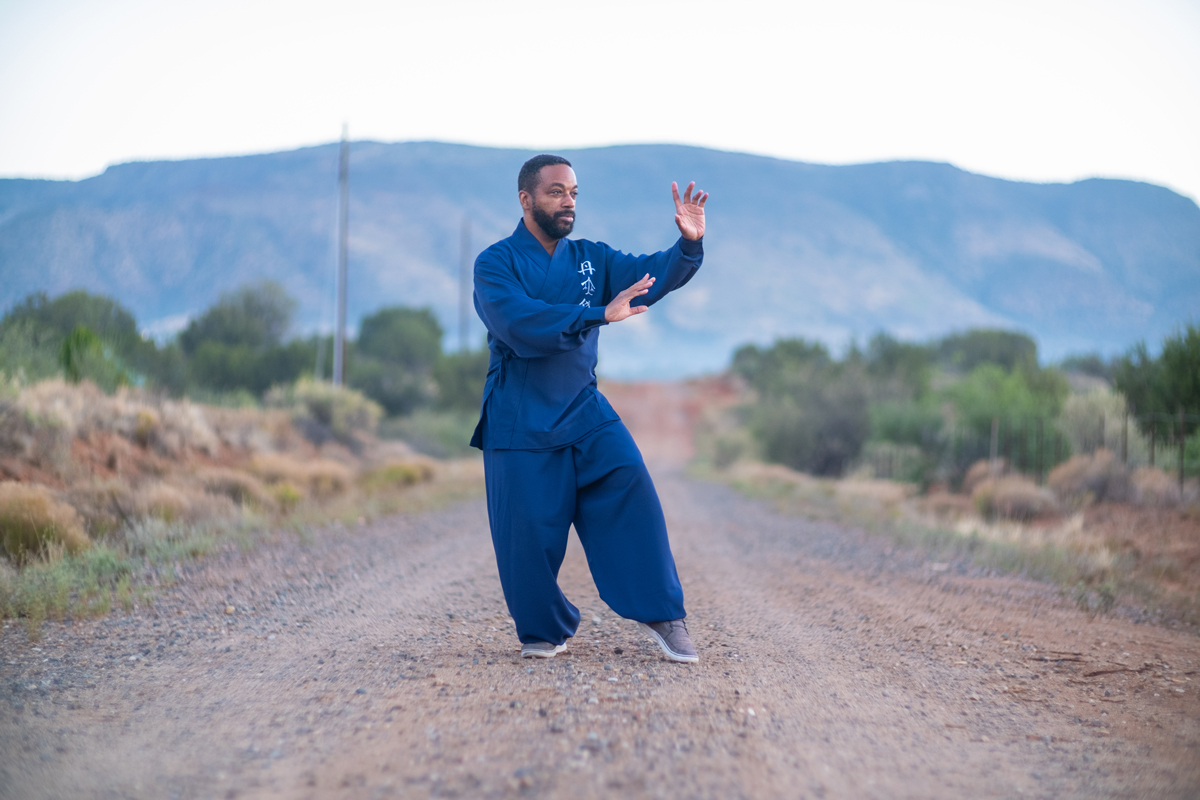
Qigong exercises combine stretching and joint work. There are thousands of qigong exercises, and perhaps just as many ways to practice them. Potential exercises include twisting your torso, bouncing and shaking your body, circling your arms, stretching your arms in opposite directions, chest opening stretches, gently hitting your solar plexus with your fists, and pushing your arms outward and inward while bending your knees.
One reason qigong is trending on social media is that it’s free and something someone can incorporate into their day at any time. Huff says that ideally, a qigong practice would be done every day for at least 15 minutes, but anything is better than nothing. “It’s a way to manage yourself, such as brushing teeth twice a day,” says Huff. “We should be managing our insides.”
The other reason it’s trending is that it’s preventive. “People come to us saying, I don’t want to replace my knees and hips. I want to do as much as I can to help my body now,” says Huff.
Unlike other styles of exercise that have meditative elements, such as yoga, qigong focuses on the journey just as much as the destination. Huff says that qigong’s differentiator is to do exercises slowly and mindfully. “For example, think of a stretch in yoga—you do it and hold the pose. In qigong, you do it, but you focus on your shoulder, then on your elbow, then on your wrist, and then hold your mind there to let it feel what’s happening,” he says.
If this sounds similar to tai chi, it’s because the two are related and often get confused. Tai chi is a martial arts discipline that derives from qigong’s principles. “Qigong is much freer,” he says.
Advertisement
[ad_2]
Source link