



[ad_1]
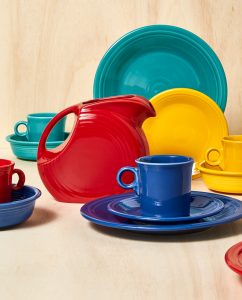
Photography by Bailey Garrot
Fiesta dinnerware has been brightening American kitchen tables with its bold colors, art deco–style designs, and mix-and-match appeal since its inception in 1936. The flagship brand of the Homer Laughlin China Company in Newell, West Virginia, Fiesta was created in response to stuffy Victorian tableware trends and Depression-era gloom. While the iconic line’s original spectrum of colors—red, blue, green, yellow, and ivory—has since expanded to include 56 hues, only 13 to 16 are available at a time. A color must be retired before a new one is introduced, a yearly tradition begetting one of Fiesta’s hallmarks: its devout collector culture.
- An especially coveted Fiesta color is the original orange-red. The secret to the vibrant glaze? Uranium. Now nicknamed “radioactive red,” the color was discontinued in the 1940s when the federal government confiscated the material for atomic research, but surviving dishes can still set off Geiger counters.
- Every piece of Fiesta dinnerware is made and shipped from the original Homer Laughlin factory (rebranded the Fiesta Tableware Company in 2020). That’s more than half a billion sold since the company was founded.
- Free tours of the 37-acre plant are offered on Tuesdays and Fridays by reservation. Watch the entire production process, from molding and glazing to polishing and firing, then pay a visit to the museum, which features ceramics from the company’s 153 years of history as well as rare pieces, such as the raspberry-hued bowl, of which only 500 pieces were made.
- While visiting the complex, don’t miss the factory outlet, known for its “seconds” bins stocked with discounted, slightly flawed items. At the twice-annual tent sales in June and October (3–6), prices are lowered even further.
- Continue your exploration at the renowned Tamarack Marketplace in Beckley, a trove of West Virginia arts and crafts from all 55 counties. Shop handmade goods, observe local artisans at work, and check out the center’s kaleidoscopic Fiesta dinnerware display.
This article appears in the Fall 2024 issue of Southbound.
Advertisement
[ad_2]
Source link