



[ad_1]
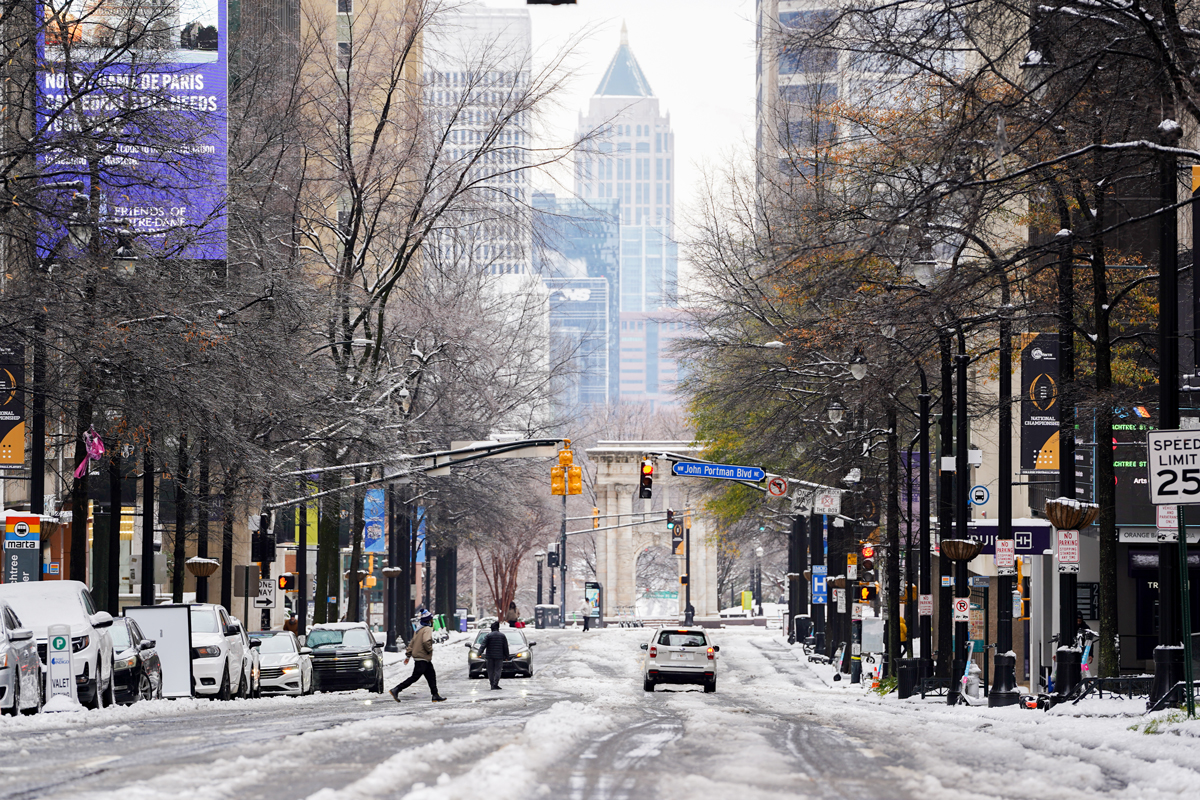
Photograph by Megan Varner/Getty Images
For Atlantans experiencing homelessness, living on the street has its share of dangers. But it’s on the coldest nights that the city’s unsheltered population becomes acutely vulnerable. A 2024 investigation by The Atlanta Journal-Constitution found that over the previous three years, at least 32 people who were confirmed homeless died from cold exposure in metro Atlanta. And the number of unsheltered people is growing: The 2024 Point-in-Time Count, administered every January, found more than 1,000 people in Atlanta who were not in any temporary housing, up from 738 the year before. (Survey data for 2025 isn’t yet released.)
“Our clients have addiction behaviors, issues with their mental health,” says Torrance Wynn, a street medicine resource specialist with Mercy Care. “But when temperatures drop, our number one concern is, Will they be alive the next morning?”
Mercy Care’s street teams provide a range of direct services for Atlantans experiencing homelessness. The organization, founded in Ireland by the Catholic Sisters of Mercy, who opened Atlanta’s first hospital in 1880, provides primary care services at its clinics, as well as street services ranging from flu vaccinations to daily medicine drop-offs. From there, Mercy Care staff will offer clients more long-term resources such as transitional housing and mental healthcare. But the first step, says Mercy Care CEO Kathryn Lawler, is meeting people’s “basic human dignity and basic human needs.”
When it comes to cold, that means providing whatever they need to stay alive. The City of Atlanta, surrounding counties, and various churches open warming shelters when temperatures drop, but getting people there and back requires serious logistics. Warming shelters fill up, and each county has its own regulations, including the temperature threshold that dictates when shelters open. “Churches and shelters open when they want, but [the counties] range from 38 to 32 degrees, and it depends on precipitation,” says Meredith Swartz, Mercy Care’s chief planning officer. “Plus, they all use a different forecast.”
Mercy Care staff provides MARTA cards or drives people to pickup areas, where buses transport them to the shelters (and return them, as shelters generally close during the day). That’s if they can convince them to go. Many homeless people are deeply wary of public shelters—with good reason, notes Michelle Keith, a street medicine case manager. “It can be really traumatizing to be in an unfamiliar place, especially if you’re struggling with trauma,” she says. “Some people prefer to stay where they know they are safe.”
Some people decline warming shelters because they can’t bring pets; others worry their belongings will be stolen while they’re gone. Women who have fled domestic violence may fear bumping into their abuser. For those who prefer to sleep outdoors, Mercy Care provides hand warmers, blankets, and even mats made by volunteers that provide some protection against the cold ground.
Those measures aren’t always enough. “It gets emotional during this time of year,” says Wynn, who has been working with Mercy Care for more than 20 years. “It can get you really down when you find out some of the clients you’ve worked with are no
longer here.”
When the stakes are so high, getting even a single hesitant person into a warming shelter is a victory. “It was getting cold, and I was working with this little lady for days, but she did not want to go,” recalls Keith of one client. “But last year we found her a women’s shelter in Selena [S. Butler Park in Atlanta], and she absolutely loved it there.” The woman has since moved into a transitional shelter, and Mercy Care is finding her longer-term solutions. Says Keith, “She just needed that first step.”
This article appears in our February 2025 issue.
Advertisement
[ad_2]
Source link