



[ad_1]
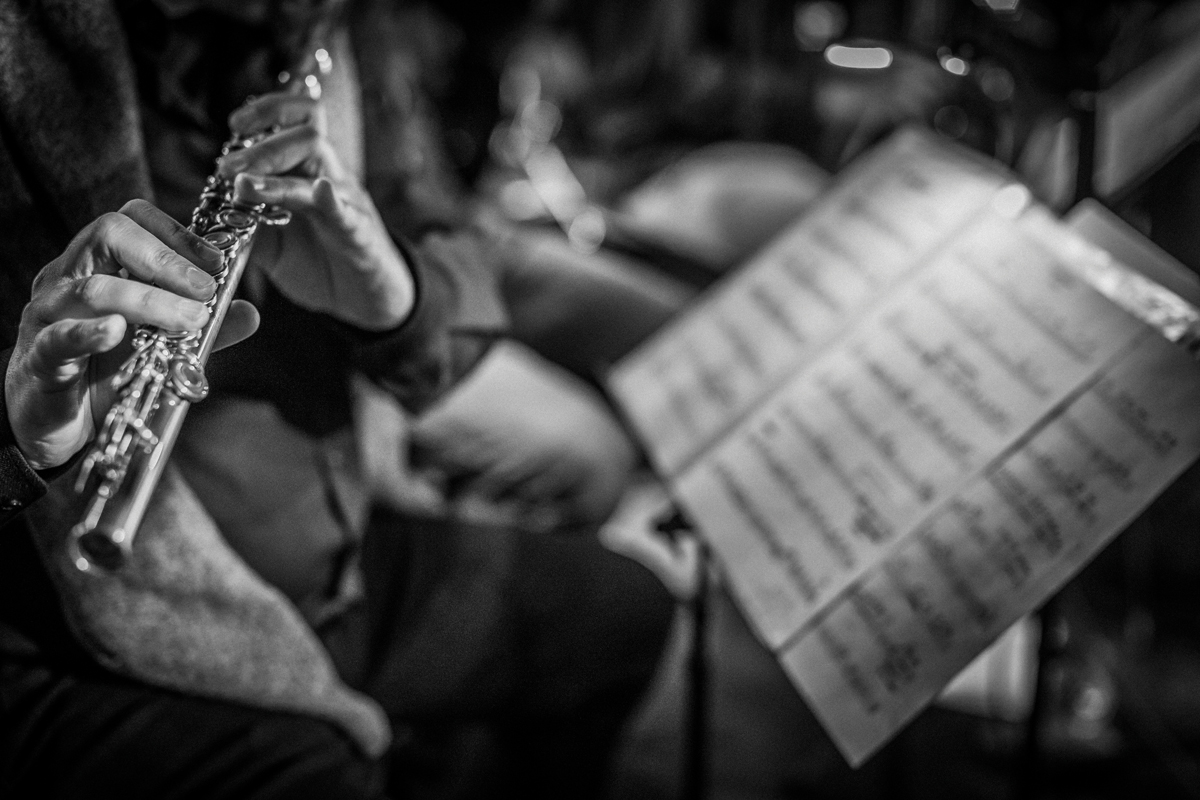
Photograph by Getty Images
If music is form, the Atlanta Federation of Musicians is function.
It’s the Georgia chapter of the American Federation of Musicians. The musician union’s job is fundamentally to be a mediator between artists, the corporations that publish their music, and the venue managers who hire them to perform. That goes for any artist in any genre at any point in their career: Lil Jon, R.E.M., the Allman Brothers Band, and William Bell have all been members.
The union’s office is a plain brick building in the Morningside neighborhood. It’s spitting distance from the Beltline and a stone’s throw from Piedmont Park. Inside are two desks—one for each of its full-time employees, not counting the secretary-treasurer’s dog, Ellie. She’s parked beside her dad while he works. The other desk doubles as a stand for union literature and stickers.
The atmosphere in the office may be laid-back, but the union’s work is essential. It represents eight Atlanta area orchestras, including the Atlanta Symphony Orchestra (ASO) and The Atlanta Opera Orchestra. These orchestras have a set membership, so, like any union shop, they collectively bargain with ownership for wages, working conditions, and pension benefits.
But most players are freelancers, “side musicians” working on other people’s projects.
“It’s a challenging industry,” says Bill Johnston, the Atlanta chapter’s secretary-
treasurer and principal viola for The Atlanta Opera Orchestra. “It takes a lot of skill to be a musician, but there are a lot of musicians who want to negotiate pay as well. It can be easy for unscrupulous employers to exploit that.”
That’s especially true when agreements are made without ever meeting face-to-face. “A lot of issues arise when, in the freelance world, things are exchanged through text message,” says Aaron Kruziki, the union’s head of strategic operations. If club owners aren’t made to put terms on paper, they may get in the habit of delaying payments or lowballing musicians.
But if the venue manager signs a union contract, they pay 11.99 percent of the fee for the musician’s pension and 3 percent to the union as a service fee. The benefit for the musician lies in the wage scale, the guaranteed minimum fee the union sets for all live performances.
In addition to pensions, residuals come into play for television and movie work. Kruziki’s band appeared in a 15-second spot for Gossip Girl in 2008. Seven years later, band members found out they had money from residuals sitting in an account waiting for them. “It was thousands of dollars,” says Kruziki, a woodwind specialist who has performed with Bernadette Peters and Johnny Mathis. “For me, I think it was maybe four or five grand.”
Local membership now hovers around 800, lower than it’s ever been. Today only 10 percent of Atlanta’s musicians are union members.
Kruziki says even some of his friends struggle to see a reason to belong to the union. The pension benefits don’t add up for musicians playing a couple gigs a year, and when there’s a thousand other trumpet players in town, musicians assume asking for a union agreement could cost them an opportunity. “It just adds one more layer of complexity to negotiate a union contract,” says Kruziki. “And most band leaders don’t want to deal with that.”
The hassle is worth it, says Bruce Kenney, president of the Atlanta chapter and a horn player with the ASO. “I think the challenge for musicians’ unions around the country today is to try to ensure that musicians are aware that their work is valuable.”
This article appears in our April 2025 issue.
Advertisement
[ad_2]
Source link