



[ad_1]
Photograph by Martha Williams
Some establishments merely occupy space in Atlanta. Then there is Nakato. For 50 years, this restaurant has been more than a fixture on legendary Cheshire Bridge Road. It has been a quiet anchor in the city’s culinary landscape. The Nakato family didn’t chase trends; they set a standard. The restaurant has always balanced traditional Japanese formality with genuine comfort. Generations have marked milestones here, confident that the food and service won’t disappoint. I have celebrated five of my own special occasions here over the years.
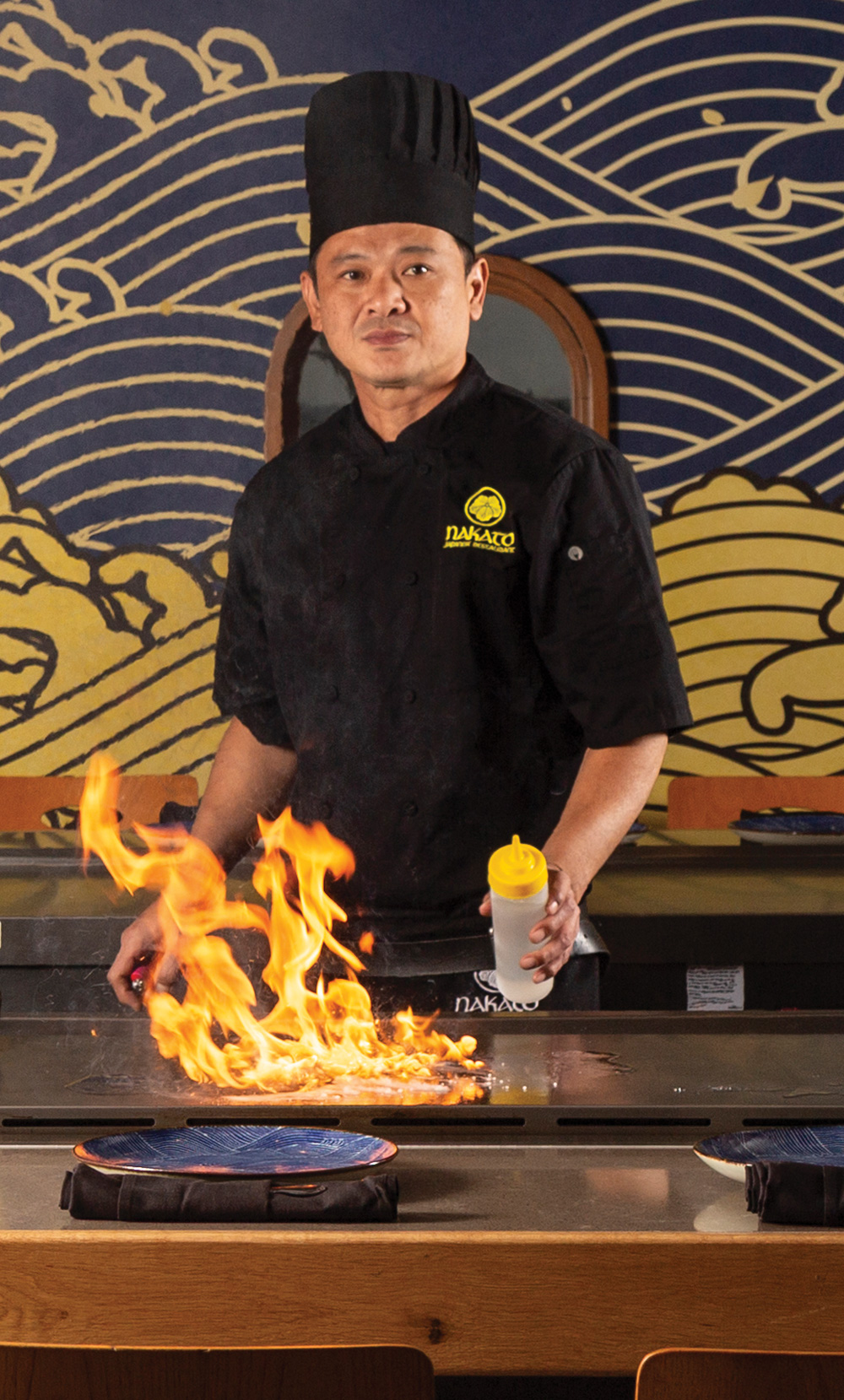
For many, Nakato is synonymous with the fiery onion volcano that ignites celebrations in the teppanyaki rooms. It’s an image many remember: the chef flipping shrimp and playing with fire while wearing a tall toque. Yet this is only the surface of the story. The real heartbeat of Nakato has always been the family that started it and their chosen family: the guests.
In a city where restaurants come and go, often defined by trends or Instagram moments, Nakato has remained steady for more than five decades. The service isn’t showy but instead offers the kind of consistency that comes from doing things right for a very long time. So, when third-generation owner Sachi Nakato Takahara announced a $2.4 million renovation, I wondered if it would change what makes Nakato special. In Atlanta, big restaurant makeovers sometimes mean losing history to a slick new look. But that’s not what happened here. The refresh was more like a respectful polish than a complete redo: brighter, more modern, and more comfortable, yet still completely Nakato at its core.
Photograph by Martha Williams
Every element of the renovation honors both history and place. The new bar top, carved from Druid Hills white oak, roots the restaurant firmly in its home soil. A custom Japanese Seigaiha wave pattern, painted in blue and gold and prominently installed in the space, evokes both luck and resilience—themes ideally suited to a restaurant that has survived and thrived. Even the practical upgrades carry weight: The 34-year-old teppanyaki grills, witnesses to countless celebratory moments, were replaced with new ones. The dining rooms are brighter thanks to a fresh coat of white paint, and the adjoining bar has been updated with illuminated decor touches. The changes make the restaurant seem lighter and more spacious, yet there is no sense of lost intimacy. Nakato still seems like itself, but with a bit of a much-needed glow-up.
The food remains an unchanged and dependable mix of sushi standards, homestyle Japanese dishes, and hibachi standards cooked on the teppanyaki grills. Hibachi chefs still command the stage with skill and flair, delivering moments of excitement without overshadowing the food itself. It is still a great place for special occasions, and when I was there, the foyer was already packed with Atlantans celebrating something, even if it was just the restaurant’s reopening after a four-month renovation.
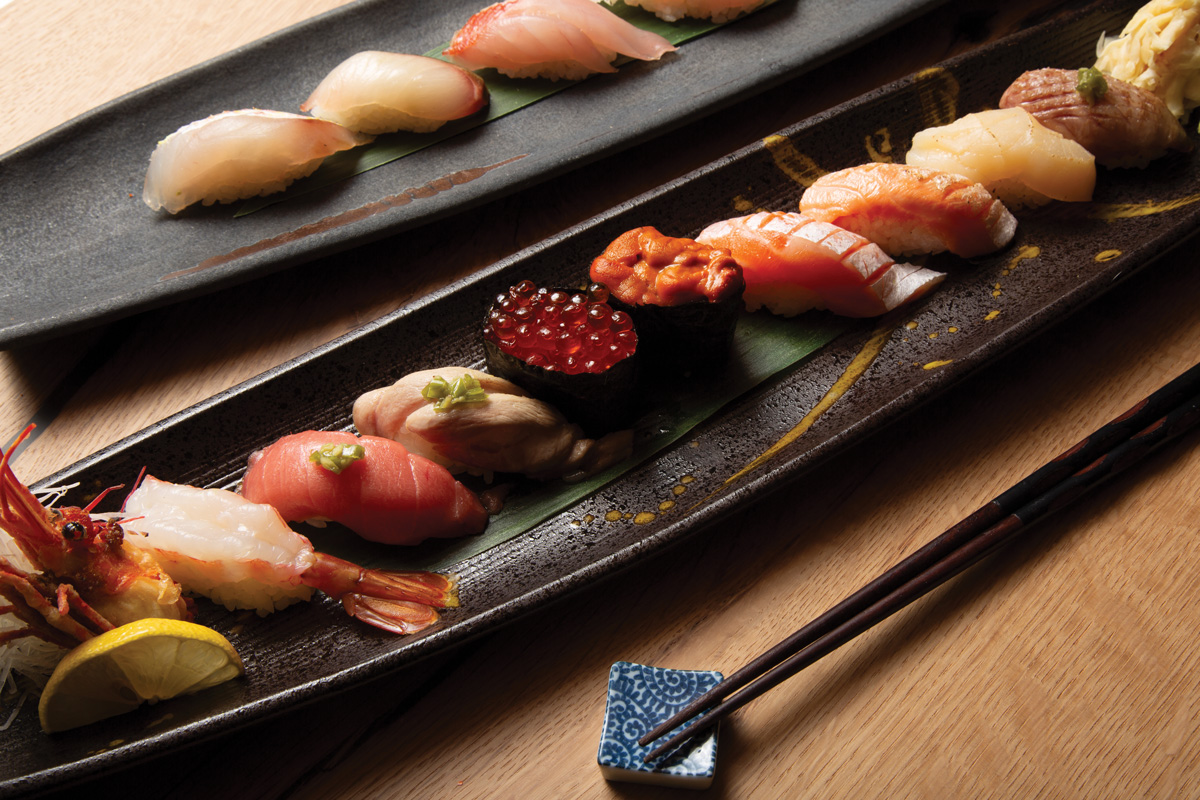
The Garden Room remains my favorite place to dine. It not only has an exceptional sushi program, great for takeout or delivery, but also offers an enormous menu of hard-to-find classic Japanese homestyle favorites. This is what I come here for the most. I typically order sukiyaki and shabu shabu because it is difficult to find Japanese-style preparations of these dishes in Atlanta proper. Both are hot pot–style dishes, so you cook platters of thinly sliced beef, vegetables, and noodles at the table. The sukiyaki is cooked in a sweet soy-based sauce, and the shabu shabu is cooked in a broth and dipped in a duo of creamy sesame and ponzu sauces. It brings me great comfort because I used to get shabu shabu with my sister in our 20s on girls’ nights, and now I go with my daughter. Otherwise, I am ordering nigiri; the simpler, the fewer sauces, the better. They do, however, make great rolls, if that’s your thing.
Sushi continues to arrive pristine, and the fish is always excellent quality and flown in from Japan two to three times a week. Beyond the sushi, hibachi entrees, soba noodles with crispy crowns of shrimp tempura, and bountiful bento boxes, there is also a strong focus on seasonality, so look for special menus featuring in-season ingredients, such as a recent smattering of elegant appetizers with matsutake mushrooms, such as chawanmushi, an egg custard.

Photograph by Martha Williams
At the new bar, the somewhat-renewed cocktail program is bold but measured. The Dirty Dashi martini, with kelp-infused vermouth, is a perfect example: savory and nuanced. But I am most happy with a tall Orion beer and two tiny, frosted glasses, which my waiter changed out mid-bottle so we could have a fresh glass. That is the type of service one can expect here, because it is an arena in which Nakato thrives. The restaurant adheres to the Japanese concept of omotenashi—a selfless, anticipatory form of service central to the experience. Staff members always do a good job of attending to details with quiet confidence, ensuring guests feel cared for without ceremony or fuss.
Nakato has lasted this long because the family keeps making wise choices that respect where they came from while moving the restaurant forward. The renovation is an example of that. Now the space is fresh but still familiar. Nakato isn’t just another restaurant in Atlanta. It’s part of the city’s fabric where care, craft, and tradition have quietly thrived for generations. Hopefully, that continues for many more.
This article appears in our January 2026 issue.
Advertisement
[ad_2]
Source link