



[ad_1]
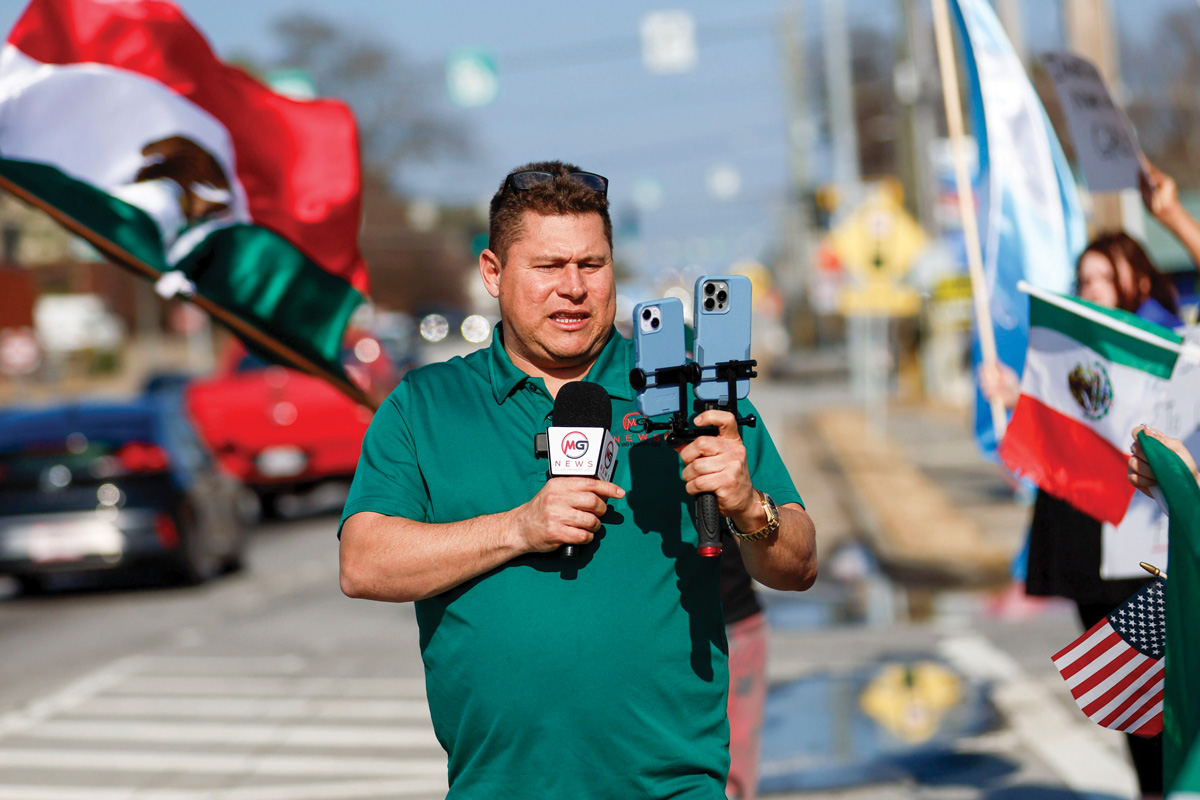
Photograph by Miguel Martinez/Atlanta Journal-Constitution via AP
Atlantan is a first-person account from a familiar stranger who has made the city tick. Guevara was arrested covering a protest in Doraville in June 2025 and deported in October that year.
I am still working as a journalist. My plan is to continue reporting on news from around the world. I have already done two international stories, in Costa Rica and Colombia, both following up with people I interviewed while we were together in the ICE detention center. And tomorrow, I am going to Portugal to talk about freedom of the press. A journalists’ conference has invited me to tell my story. This is completely new for me, because when I lived in the United States, for almost 22 years, I couldn’t travel outside the country. I believe perhaps that is part of the divine purpose.
I always believed that, in the United States, there was freedom of the press and that I could practice journalism freely. And that is how it was for 20 years, until the administration changed. I had a work permit issued by the Department of Homeland Security—100 percent legal—which allowed me to live in the United States, have a driver’s license, and open my own media company. I thought that gave me the possibility to live well. And I did, until today, when things are different.
Being back in El Salvador has not been easy at all. Although it’s my country, everything has changed so much. I’m in a place I no longer even recognize. And the hardest part of all is that my family stayed in the U.S., so, basically, I am here alone. But I am a person of faith. And although it has been difficult, and I still have not adapted to life here, I have faith that everything will turn out well. That God will have something better prepared for me. That is my hope. And I am trying to live day by day.
I was in jail for 112 days, in five jails. Immigration kept moving me. The saddest part of all is that they had me 70 days in solitary confinement. They only let me out two hours a day. I had to sleep with the light on. It was quite hard. I think they did that to punish me mentally and to make me accept voluntary departure. I did not accept it.
They pressured me: “Sign your voluntary departure and you will leave tomorrow, or if not, you are going to be in jail for a long time.” I did not sign, and I was locked up for almost four months.
Even from jail I interviewed four inmates. With paper and pencil I wrote their stories. It made me feel alive. I felt that I still had the power of the media.
Before the Trump administration, I had a very good relationship with ICE. They gave me ride-alongs and allowed me access to report from jails and even from a deportation flight. I never thought that I was going to be one more prisoner, a person treated like a criminal. I did not commit any crime. The only crime I committed was working hard and reporting on immigration. I feel like I lived the very story that I used to report on.
I have colleagues who still work in the media and are Hispanic immigrants. Many of them are not citizens, and I’m worried because I think that something could happen to them. I tell them, “Do not get into immigration topics because, right now . . . They are going to revoke your visas. They can persecute you, and they can arrest you and deport you, as it happened to me.”
I am the first and only journalist who has been arrested and deported under the Trump administration. But, possibly, I will not be the last. And that worries me.
I am a journalist, and I cannot keep quiet.
This article appears in our January 2026 issue.
Advertisement
[ad_2]
Source link